A reliable water heater is something most homeowners don’t think about—until it stops working. Cold showers, rusty water, leaks, or strange noises can quickly turn into an urgent (and expensive) problem. One of the most common questions homeowners ask is:
How often should you replace your water heater?
The short answer:
Most traditional tank water heaters last 8–12 years, while tankless water heaters can last 15–20 years or longer with proper maintenance. However, age alone doesn’t tell the full story. Many water heaters fail early due to hard water, lack of maintenance, or hidden damage—while others last well beyond their expected lifespan.
In this guide, we’ll explain how often water heaters should be replaced, the most common warning signs of a failing unit, what shortens or extends lifespan, and how to decide whether repair or replacement makes the most sense for your home.
Why Knowing When to Replace Your Water Heater Matters
Waiting too long to replace a failing water heater can lead to:
- Sudden loss of hot water
- Flooding and water damage
- Higher energy bills
- Emergency replacement costs
- Mold and structural damage
Replacing a water heater before it fails gives homeowners more control over cost, timing, and system selection.
Average Lifespan of Water Heaters
Water heater lifespan depends on system type, water quality, and maintenance habits.
Typical Water Heater Lifespans
| Water Heater Type | Average Lifespan |
|---|---|
| Gas tank water heater | 8–12 years |
| Electric tank water heater | 10–15 years |
| Tankless water heater | 15–20+ years |
| Boiler-fed water heater | 10–15 years |
| Solar water heater | 15–25 years |
If your water heater is approaching or exceeding these ranges, it’s time to start planning for replacement—even if it’s still working.
How to Tell How Old Your Water Heater Is
If you’re unsure how old your water heater is, check the manufacturer’s label on the tank.
Where to look:
- Side of the tank
- Near the top or bottom
- On tankless units, inside the access panel
The serial number usually contains the manufacturing date. A plumber can help decode it if needed.
Key Signs Your Water Heater Is Failing
A water heater rarely fails without warning. Below are the most common signs that replacement may be needed.
1. Your Water Heater Is Near or Past Its Expected Lifespan
Age alone isn’t a guarantee of failure—but it significantly increases risk.
Why age matters:
- Internal components wear down
- Tank linings degrade
- Anode rods are often depleted
- Corrosion accelerates
If your tank water heater is over 10 years old, replacement planning should begin—even if performance seems acceptable.
2. Inconsistent or Insufficient Hot Water
Running out of hot water faster than usual is a major red flag.
Common causes:
- Sediment buildup reducing tank capacity
- Failing heating elements or burners
- Undersized system for household needs
If repairs don’t restore consistent performance, replacement may be the better long-term solution.
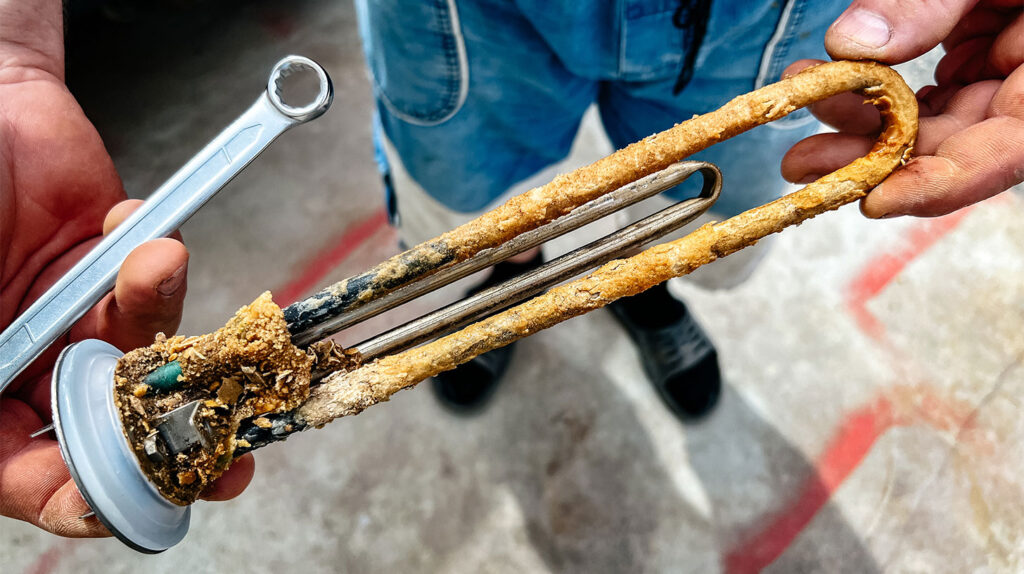
3. Rusty or Discolored Hot Water
Brown, red, or cloudy water coming from hot taps often indicates internal corrosion.
What this means:
- The tank is rusting from the inside
- The anode rod has failed
- Tank integrity is compromised
Once rust appears in hot water, tank failure is often imminent.
4. Water Leaks Around the Base of the Unit
Leaks are one of the most serious warning signs.
Possible causes:
- Cracked tank
- Failed internal seals
- Excessive internal pressure
A leaking tank usually cannot be repaired and requires immediate replacement to avoid flooding.
5. Unusual Noises (Popping, Rumbling, Banging)
Noise often points to heavy sediment buildup.
Why sediment is dangerous:
- Reduces efficiency
- Overheats the tank bottom
- Causes metal fatigue
- Shortens lifespan dramatically
Flushing may help early on—but loud, persistent noises often signal irreversible damage.
6. Rising Energy Bills Without Increased Usage
An aging water heater becomes less efficient over time.
Causes of higher energy costs:
- Heating elements coated in sediment
- Longer heating cycles
- Heat loss through degraded insulation
If your utility bills are creeping up and usage hasn’t changed, your water heater may be the culprit.
7. Frequent Repairs
A single repair isn’t a problem—but repeated repairs are.
Replacement is usually better if:
- Repairs are frequent
- Repair costs exceed 50% of replacement cost
- Multiple components are failing
- The unit is already near end-of-life
At a certain point, repairs only delay the inevitable.
8. Water Pressure Changes or Valve Issues
Internal corrosion and scale can restrict flow through the system.
Signs include:
- Reduced hot water pressure
- Pressure relief valve discharging frequently
- Temperature fluctuations
These issues often point to systemic failure rather than isolated parts.
Tank vs Tankless: Replacement Timing Differences
Tank and tankless systems age differently.
Tank Water Heater Replacement Timing
- Replace proactively around 10–12 years
- Earlier in hard water areas
- Earlier if maintenance was neglected
Tankless Water Heater Replacement Timing
- Replace after 15–20+ years
- Only after repeated heat exchanger issues
- Requires strict annual maintenance
Tankless units last longer—but only if properly maintained.
What Shortens a Water Heater’s Lifespan?
Several factors can dramatically reduce how long a water heater lasts.
Top lifespan killers:
- Hard water mineral buildup
- Skipping annual maintenance
- Improper installation
- Oversized or undersized units
- Excessive water pressure
- High temperature settings
In hard water areas, lifespan may be reduced by 30–50% without proper treatment.
How to Extend the Life of Your Water Heater
If your unit isn’t ready for replacement yet, these steps can help extend its life.
Maintenance tips:
- Flush tank annually (every 6 months in hard water areas)
- Replace anode rod every 3–5 years
- Set thermostat to 120°F
- Inspect pressure relief valve
- Install a water softener if needed
Proper maintenance can add 3–5 years to a tank water heater’s lifespan.
Repair vs Replacement: How to Decide
Here’s a simple rule of thumb.
Repair Makes Sense If:
- Unit is under 8 years old
- Issue is minor
- Tank shows no signs of corrosion
- Energy efficiency is still acceptable
Replacement Makes Sense If:
- Unit is over 10 years old
- Repairs are frequent or costly
- Rust or leaks are present
- Efficiency has declined
- Household hot water demand has increased
Cost Comparison: Repair vs Replacement
| Scenario | Typical Cost |
|---|---|
| Minor repair | $200–$400+ |
| Major repair | $500–$900+ |
| Tank water heater replacement | $1,200–$2,500 |
| Tankless water heater replacement | $3,500–$6,500 |
While replacement costs more upfront, it often saves money long-term.
Benefits of Replacing an Aging Water Heater
Upgrading offers more than just reliability.
Key benefits:
- Lower energy bills
- Improved hot water consistency
- Reduced risk of leaks and flooding
- Better safety features
- Increased home value
- Quieter operation
Newer systems are also more environmentally friendly.
Should You Upgrade When Replacing?
Replacement is an opportunity to upgrade—not just swap.
Popular upgrades in 2026:
- High-efficiency gas models
- Hybrid electric water heaters
- Tankless systems
- Smart water heaters
- Leak detection shutoff valves
Choosing the right upgrade depends on household size, budget, and usage habits.
How Replacement Timing Affects Cost
Replacing a water heater before it fails offers major advantages.
Proactive replacement allows:
- Competitive pricing
- Proper system sizing
- Scheduling flexibility
- Avoiding emergency premiums
Emergency replacements often cost 20–40% more.
Common Myths About Water Heater Replacement
❌ “If it still works, don’t replace it”
✔ Old units can fail suddenly and cause damage.
❌ “Tankless is always better”
✔ Tankless systems aren’t ideal for every home.
❌ “Water heaters fail without warning”
✔ Most failures show clear signs beforehand.
Final Thoughts: When to Replace Your Water Heater
So—how often should you replace your water heater?
- Tank water heaters: Every 8–12 years
- Tankless water heaters: Every 15–20+ years
But more importantly, pay attention to warning signs. Replacing a failing unit early saves money, prevents damage, and improves comfort.
If you’re in Albuquerque or the surrounding area and wondering whether it’s time to repair or replace your water heater, 505 Plumbing, Heating & Cooling can help with honest inspections, expert recommendations, and professional installation.
📞 Call (505) 560-3865 today
🌐 Visit https://505plumbing.com
We treat every home like it’s our own.