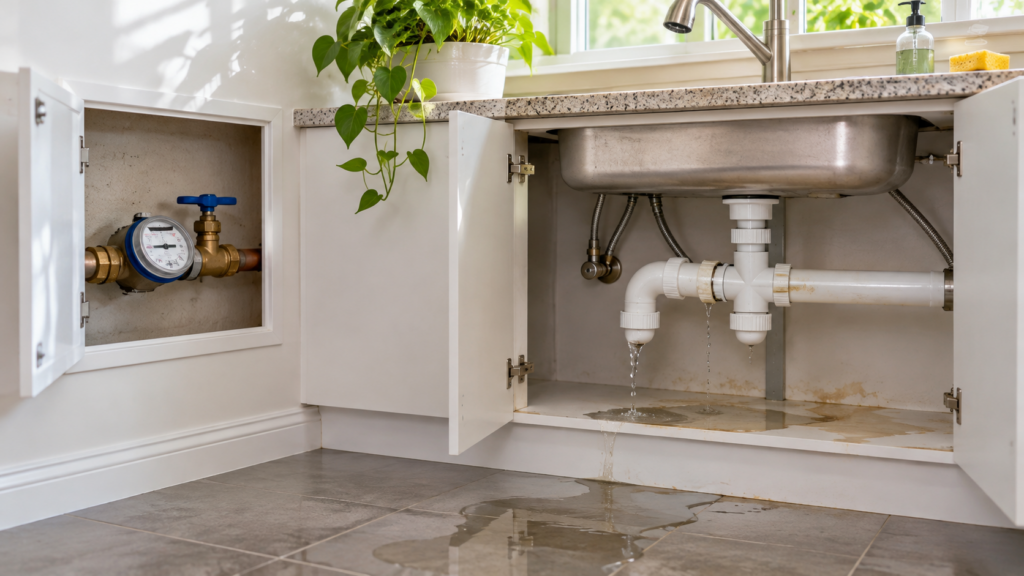
You open your water bill expecting the usual amount, but something is different. Maybe it’s $50 higher than last month, or perhaps it has doubled without any obvious explanation.
You haven’t changed your daily routine. Nobody is taking longer showers, and you haven’t been filling a swimming pool. So where is all that extra water going?
If your water bill is suddenly much higher than normal, the most common explanations include hidden plumbing leaks, running toilets, leaking irrigation systems, increased water usage, or changes in your utility’s billing rates. Even a small leak that goes unnoticed can waste thousands of gallons over time.
The tricky part is that you might not see or hear anything unusual. Water can leak inside walls, underneath floors, or underground for weeks before you notice a problem.
According to the U.S. Environmental Protection Agency (EPA), household leaks can waste nearly 10,000 gallons of water per year in an average home. Nationwide, those leaks add up to an enormous amount of wasted water.
Fortunately, you don’t have to start tearing into walls to figure out what’s happening.
In this guide, we’ll explain nine common reasons your water bill might suddenly increase, how to check for hidden leaks, and when it’s time to call a plumber.
Why Is My Water Bill Suddenly So High? 9 Common Causes
Before assuming your water company made a mistake, it’s worth checking a few common plumbing problems.
Some are easy to identify and repair. Others require professional leak detection equipment.
| Possible Cause | Common Warning Signs | What to Check |
|---|---|---|
| Running toilet | Random flushing sounds, water constantly running | Toilet tank and flapper |
| Hidden pipe leak | Damp walls, musty odors, unexplained water use | Pipes inside walls or floors |
| Underground water line leak | Wet patches, unusually green grass, low pressure | Main water supply line |
| Irrigation system leak | Soggy lawn, pooling water, excessive outdoor use | Sprinkler heads, valves, and pipes |
| Leaking water heater | Puddles, corrosion, repeated pressure relief discharge | Water heater tank and connections |
| Dripping faucets | Steady dripping, worn handles, leaking spouts | Faucets and shower fixtures |
| Faulty plumbing fixtures | Constant water flow, dripping valves | Showers, appliances, and supply lines |
| Increased household water use | Higher usage without obvious leaks | Guests, laundry, landscaping, pools |
| Billing or meter issues | Unusual readings, unexpected charges | Utility bill and water meter |
Let’s look at each possibility more closely.
1. A Running Toilet Could Be Causing Your High Water Bill
A running toilet is one of the most common reasons homeowners experience an unexpected increase in their water bill.
The frustrating part is that a toilet can waste a surprising amount of water without making much noise.
Inside your toilet tank is a rubber component called a flapper. When you flush, the flapper lifts and allows water to flow into the bowl. Once the tank empties, the flapper closes and the tank refills.
Over time, the rubber flapper can wear out, warp, or develop mineral deposits that prevent it from sealing correctly.
When that happens, water continuously leaks from the tank into the bowl.
Your toilet keeps refilling to replace the lost water, even when nobody has flushed it.
How much water can a running toilet waste?
A small leak from a worn toilet flapper may waste approximately 30 gallons per day, according to EPA WaterSense guidance. A more serious leak can waste considerably more.
For comparison:
| Toilet Leak Rate | Water Wasted Per Day | Water Wasted Per 30 Days |
|---|---|---|
| 30 gallons per day | 30 gallons | 900 gallons |
| 100 gallons per day | 100 gallons | 3,000 gallons |
| 200 gallons per day | 200 gallons | 6,000 gallons |
| 500 gallons per day | 500 gallons | 15,000 gallons |
These examples illustrate different possible leak rates. Actual water loss depends on the problem and how long it continues.
A toilet leaking 200 gallons daily can waste approximately 6,000 gallons in one month.
That’s a significant amount of water from a problem that might be fixed with a relatively inexpensive replacement part.
How to check your toilet for a hidden leak
You can perform a simple toilet leak test using food coloring.
- Remove the toilet tank lid.
- Add several drops of food coloring to the water inside the tank.
- Do not flush.
- Wait approximately 10 minutes.
- Check the water inside the toilet bowl.
If the colored water appears in the bowl without flushing, water is leaking past the flapper or flush valve seal.
The EPA recommends this dye test as a simple way to identify silent toilet leaks.
Also listen for toilets that refill randomly, make hissing sounds, or run long after being flushed.
Quick tip: Check every toilet in your house. It’s possible to have more than one leaking toilet contributing to your water bill.
2. Hidden Plumbing Leaks Inside Walls or Floors
Not every water leak leaves a visible puddle.
Some of the most expensive plumbing leaks develop inside walls, beneath flooring, or above ceilings.
A small crack in a copper pipe, burst pipe, a failing connection, or a damaged fitting can allow water to escape continuously.
Because the leak is hidden behind building materials, you may not realize anything is wrong until your water bill increases or visible damage appears.
Warning signs of a hidden plumbing leak
Watch for these common symptoms:
- Unexplained increases in water consumption
- Damp or discolored drywall
- Peeling paint or bubbling wallpaper
- Musty odors that won’t go away
- Warped flooring or loose tiles
- Water stains on ceilings
- Sounds of running water when fixtures are turned off
- Unexplained drops in water pressure
Not every hidden leak produces these symptoms. Some continue for months without obvious signs.
Can a small pipe leak really raise your water bill?
Absolutely.
Consider a hidden leak that wastes just 0.1 gallon per minute.
That may not sound like much, but because water is escaping continuously, the total adds up quickly.
At that rate, the leak wastes approximately 144 gallons per day, or 4,320 gallons over 30 days.
A larger leak can waste several times that amount.
How professionals locate hidden leaks
Plumbers may use specialized tools to identify leaks without immediately opening walls or floors.
Depending on the situation, these can include acoustic listening equipment, moisture meters, thermal imaging cameras, and pressure testing.
These methods help narrow down the problem area so repairs can be made with less unnecessary damage.
If your water meter indicates continuous water usage but you cannot find an obvious source, professional leak detection may be the next step.
3. An Underground Water Line Leak
One of the more serious causes of a suddenly high water bill is a leak in the underground water supply line.
This pipe carries water from the utility connection toward your home.
Depending on your property and plumbing configuration, portions of the line may run beneath your yard, driveway, sidewalk, or foundation.
Because the pipe is buried, leaks can be difficult to notice.
Water may seep into surrounding soil without ever reaching the surface.
Signs of an underground water leak
Common warning signs include:
- An unexplained increase in water usage
- Wet or muddy areas when it hasn’t rained
- Patches of grass that are greener than the surrounding lawn
- Soil erosion or sinking ground
- Reduced water pressure throughout the home
- Water collecting near a driveway or foundation
- Sounds of flowing water when nothing is running
Keep in mind that these symptoms can have other causes, including drainage problems and irrigation leaks.
Why underground pipes develop leaks
Several conditions can contribute to underground water line damage.
Aging pipes: Older materials may corrode or deteriorate over time.
Ground movement: Shifting soil can place stress on buried plumbing.
Tree roots: Roots can affect surrounding soil and exploit existing weaknesses in underground systems.
Improper installation: Poor connections or inadequate support may lead to problems later.
Physical damage: Excavation, landscaping projects, and heavy equipment can accidentally damage buried lines.
If you suspect an underground leak, avoid digging until buried utilities have been properly located.
A plumber can test the water line and help determine whether repair or replacement is necessary.
4. A Leaking Sprinkler or Irrigation System
If your water bill suddenly increases during spring or summer, your lawn irrigation system deserves a closer look.
Sprinkler systems can waste large amounts of water when underground lines crack, valves fail, or irrigation schedules are set incorrectly.
Unlike a dripping faucet, an irrigation leak may only become noticeable when the system runs.
Common irrigation problems
Some of the most frequent issues include:
- Broken sprinkler heads
- Underground irrigation pipe leaks
- Valves that fail to close completely
- Damaged drip irrigation tubing
- Water spraying onto sidewalks or streets
- Incorrect watering schedules
- Irrigation controllers running more often than expected
According to EPA WaterSense, an irrigation system with a leak approximately 1/32 of an inch in diameter can waste around 6,300 gallons per month under the conditions described in its example.
That is a substantial amount of water from a very small opening.
How to inspect your irrigation system
Turn on each irrigation zone separately and walk around the yard.
Look for broken sprinkler heads, water bubbling from the soil, wet areas between sprinklers, and water spraying where it shouldn’t.
Also check whether the system continues using water after the scheduled watering cycle ends.
If your irrigation controller was recently adjusted, review the schedule to make sure watering times haven’t increased unexpectedly.
Homeowner tip: If your water bill rises during the first month of lawn watering, compare usage with the same month from the previous year rather than only the previous winter month.
Seasonal water use can vary significantly.
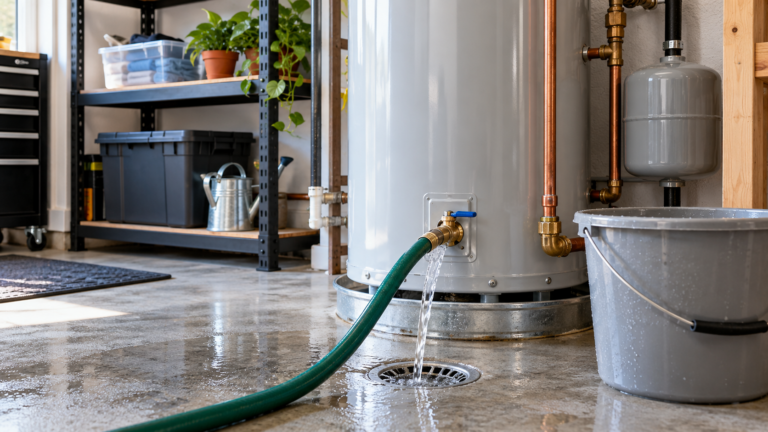
5. A Leaking Water Heater
Your water heater is another place to inspect when searching for an unexplained plumbing leak.
While water heaters don’t normally cause large increases in water consumption simply because they are old, a leaking tank, fitting, or pressure relief valve can waste water.
Common water heater leak locations
Inspect these areas:
- Cold-water supply connection
- Hot-water outlet connection
- Drain valve
- Temperature and pressure relief valve
- Expansion tank connections
- The bottom of the water heater tank
Look for puddles, corrosion, mineral buildup, and signs of repeated moisture.
What if the water heater tank is leaking?
A small leak at a loose fitting or drain valve may be repairable.
However, water leaking directly from a corroded tank usually means the tank itself has failed and needs replacement.
If the temperature and pressure relief valve is repeatedly releasing water, don’t cap or plug the discharge pipe. The valve is an important safety device.
Have a qualified plumber determine whether the problem involves excessive pressure, temperature, thermal expansion, or a defective valve.
If your water heater is leaking, addressing the problem early can help prevent additional water waste and property damage.
6. Dripping Faucets and Showerheads
A dripping faucet might not seem like a big deal.
After all, it’s only a few drops at a time.
But when those drops continue day and night, the waste adds up.
The EPA estimates that a faucet dripping once per second can waste more than 3,000 gallons of water per year.
That’s approximately 250 gallons per month.
Why do faucets start leaking?
Common causes include:
- Worn washers or O-rings
- Damaged cartridges
- Mineral buildup
- Corroded valve seats
- Loose or damaged internal components
Kitchen faucets, bathroom sinks, outdoor hose bibs, and showerheads can all develop leaks.
Sometimes the solution is as simple as replacing a cartridge or washer.
Other times, an older fixture may be better off replaced.
Don’t forget outdoor faucets
An outdoor faucet leaking near the foundation or into a garden bed may go unnoticed for weeks.
Walk around the exterior of your home and check every hose connection and outdoor faucet.
Even a small outdoor leak can contribute to a higher water bill.
7. Faulty Plumbing Fixtures or Appliances
Your water heater, toilets, and faucets aren’t the only plumbing fixtures that can waste water.
Other household equipment can develop leaks or use more water than expected.
Appliances and fixtures worth checking
Washing machines: Inspect supply hoses, shutoff valves, and connections for moisture or dripping.
Dishwashers: Check beneath the appliance for water stains or damp flooring.
Water softeners: A malfunctioning regeneration cycle or valve can send excessive water down the drain.
Reverse osmosis systems: Some drinking water filtration systems discharge wastewater during normal operation. A malfunction may cause continuous drainage.
Ice makers and refrigerator water lines: Small leaks can develop behind refrigerators and remain hidden for long periods.
Automatic filling systems: Pools and other equipment with automatic fill valves may continuously replace water lost through an unnoticed leak.
Appliances that discharge water directly into a drain can be particularly difficult to diagnose because there may be no visible puddle.
If your water meter shows unexplained usage, temporarily isolating individual fixtures or appliances can help narrow down the source.
8. Your Household Is Using More Water Than You Realize
Not every high water bill is caused by a plumbing leak.
Sometimes the explanation is simply increased consumption.
The challenge is figuring out where that additional water is being used.
Common reasons household water usage increases
More people in the house: Overnight guests or family members returning home can increase showering, laundry, and toilet use.
Seasonal landscaping: Watering lawns and gardens more frequently can noticeably increase monthly consumption.
Filling a swimming pool: Filling or regularly topping off a pool can use substantial amounts of water.
More laundry: Additional washing machine cycles increase usage.
New plumbing fixtures or appliances: Some equipment uses more water than older or more efficient alternatives, depending on the model.
Changes in daily habits: Longer showers or more frequent outdoor cleaning can gradually increase consumption.
Compare your water use, not just your bill
Look at the actual number of gallons used during the billing period.
For example, if your previous bill showed 5,000 gallons and your latest bill shows 9,000 gallons, your water consumption increased by 80%.
That is worth investigating.
However, if your water usage stayed nearly the same while the amount owed increased, the explanation may involve rates, service charges, or billing adjustments instead.
9. Water Meter Problems or Billing Errors
Sometimes the problem isn’t your plumbing at all.
Your utility bill may be higher because of a longer billing period, an estimated meter reading, a rate change, or an adjustment to a previous bill.
Although meter errors are possible, it’s important to check the billing details before assuming the equipment is malfunctioning.
What to look for on your water bill
Review the following information:
| Billing Detail | Why It Matters |
|---|---|
| Current water usage | Shows whether you actually used more water |
| Previous usage | Provides a baseline for comparison |
| Billing period | A longer billing cycle can increase the total |
| Meter reading | Estimated readings may later be corrected |
| Water rates | Higher rates can increase costs without higher usage |
| Sewer charges | Some utilities calculate these using water consumption |
| Additional fees | Service charges and adjustments may affect the total |
If possible, compare at least three recent bills and one from the same season last year.
If the numbers don’t make sense, contact your utility company and ask them to review the readings.
How to Check for a Hidden Water Leak Using Your Water Meter
One of the easiest ways to investigate a sudden increase in water usage is to check your water meter.
You don’t need specialized equipment, and the test can help determine whether water is flowing when it shouldn’t be.
Step 1: Turn off all water inside and outside your home
Make sure nobody is using water.
Turn off faucets, showers, washing machines, dishwashers, and irrigation systems.
Also check that toilets aren’t actively refilling.
Avoid using water during the test.
Step 2: Locate your water meter
Water meters are commonly installed near the property line, in a meter box, or in another location designated by the water utility.
Depending on the meter, you may see a digital display, numbered dials, or a small leak indicator.
Do not disturb utility-owned equipment or force open a locked meter enclosure.
Step 3: Record your meter reading
Write down the current meter reading or take a picture.
Some meters include a small dial or indicator that moves when even a small amount of water flows.
If the indicator moves while all water is turned off, that may suggest a leak or an appliance using water unexpectedly.
Step 4: Wait without using water
For a more thorough test, leave all water fixtures off and check the meter again after one to two hours.
American Water recommends comparing readings over a two-hour period when no water is being used.
If the reading increases, water has passed through the meter during the test.
Step 5: Narrow down the source
If your meter indicates water use, inspect toilets, faucets, irrigation equipment, and other fixtures.
If your home has a separate main shutoff valve downstream of the meter, you may be able to isolate the home’s plumbing from the underground supply line.
If the meter continues registering flow after the home’s main valve is closed, that can suggest a leak between the meter and the shutoff valve, although valve condition and plumbing configuration matter.
If the meter stops, the problem may be somewhere downstream of that valve.
A licensed plumber can help interpret the results.
Important: A meter test can help identify unexplained water flow, but it doesn’t always pinpoint the location. Intermittent leaks, appliance cycles, and small leaks may require additional testing.
How Much Can a Hidden Water Leak Increase Your Water Bill?
The cost of a plumbing leak depends on two main factors: how much water is escaping and how your utility charges for water.
A leak that seems minor can become expensive when it continues around the clock.
Water wasted by continuous leaks
The following table shows how different leak rates affect monthly water consumption.
| Continuous Leak Rate | Gallons Per Day | Gallons Per 30 Days |
|---|---|---|
| 0.05 gallon per minute | 72 | 2,160 |
| 0.10 gallon per minute | 144 | 4,320 |
| 0.25 gallon per minute | 360 | 10,800 |
| 0.50 gallon per minute | 720 | 21,600 |
| 1.00 gallon per minute | 1,440 | 43,200 |
These figures assume the leak continues 24 hours a day for 30 days.
How to estimate the additional cost
Suppose your utility charges $10 for every 1,000 gallons of additional water, including any applicable volume-based sewer charges.
At that hypothetical rate:
- A 4,320-gallon leak would add approximately $43.20.
- A 10,800-gallon leak would add approximately $108.
- A 21,600-gallon leak would add approximately $216.
- A 43,200-gallon leak would add approximately $432.
These are examples, not national average water rates. Your actual costs depend on local rates, tiered pricing, sewer charges, and how your utility calculates bills.
The important point is that even relatively small plumbing leaks can become expensive if they continue for several weeks.
How to Tell Whether Your High Water Bill Is From a Leak or Normal Usage
If you’re unsure whether your plumbing is responsible, compare the following clues.
| Signs of a Possible Leak | Signs of Increased Normal Usage |
|---|---|
| Water meter moves when everything is off | Meter stays still when no water is used |
| Toilets run or refill unexpectedly | More household members are using water |
| Damp spots or musty odors appear | Lawn watering has increased |
| Water pressure drops unexpectedly | A pool was recently filled |
| Water use stays high overnight | Usage increases during known activities |
| Water bill increases without a lifestyle change | Increased usage matches a seasonal pattern |
No single symptom proves the cause.
For example, a leaking irrigation valve may only waste water at certain times, while a hidden pipe leak may produce no visible symptoms at all.
The most useful approach is to combine your water bill history, meter readings, and a basic plumbing inspection.
What Should You Do if Your Water Bill Doubles Suddenly?
If your water bill doubles and you haven’t intentionally increased your water consumption, don’t ignore it.
Start with the simplest checks and work toward the more difficult possibilities.
Your high water bill troubleshooting checklist
- Review your latest bill. Confirm whether water usage increased or only the charges changed.
- Compare previous months. Look for unusual differences in gallons used.
- Check every toilet. Use food coloring to identify silent leaks.
- Inspect faucets and showerheads. Look for steady drips.
- Check your water heater. Look for moisture, leaking valves, or corrosion.
- Inspect irrigation equipment. Look for broken sprinklers and leaking valves.
- Test your water meter. Check whether water flows when everything is off.
- Look for hidden leak symptoms. Watch for water stains, damp flooring, and unexplained moisture.
- Contact your water utility. Ask about unusual readings, estimated bills, or possible meter issues.
- Schedule professional leak detection. If you suspect a hidden problem, have the plumbing inspected.
If you discover an active leak that is damaging your home, shut off the affected fixture or main water supply immediately.
You don’t need to wait for another billing cycle to take action.
Can You Get a Refund for a High Water Bill Caused by a Leak?
Possibly, depending on your water utility.
Some utilities offer leak adjustments or billing credits when homeowners discover and repair qualifying plumbing leaks.
However, the requirements vary.
A utility might require proof that the leak was repaired, such as an invoice from a licensed plumber.
Others may limit adjustments to certain types of leaks or allow them only once during a specific period.
Some utilities may not provide any adjustment.
What to do after discovering a leak
Keep a record of:
- The date you noticed the high water bill
- Water meter readings
- Pictures of the affected plumbing
- Repair receipts or invoices
- Communication with your utility provider
Contact your utility and ask whether it offers a leak adjustment program.
It’s also worth checking whether wastewater charges can be adjusted when leaked water did not enter the sewer system.
A billing adjustment isn’t guaranteed, but it’s worth asking, especially after a major underground or hidden pipe leak.
How to Prevent Another Unexpectedly High Water Bill
After identifying and correcting the problem, a few basic maintenance habits can help prevent future surprises.
Check your water usage regularly
Don’t wait until the end of the month to discover a problem.
If your utility offers an online customer portal or usage alerts, consider using them to monitor water consumption.
Some utilities and smart meters can identify unusual usage patterns.
Inspect toilets every few months
Toilet flappers wear out over time.
Performing a quick dye test occasionally can help catch a silent leak before it becomes expensive.
Look for leaks during routine cleaning
When cleaning bathrooms, kitchens, laundry rooms, and utility areas, check beneath fixtures for moisture.
A small amount of water underneath a cabinet may be an early warning sign.
Inspect outdoor plumbing seasonally
Check hoses, faucets, irrigation systems, and outdoor valves before the watering season begins.
A leak outside can waste water without damaging the inside of your home, making it easier to overlook.
Consider a smart water leak detector
Smart water monitoring devices can alert homeowners to unusual water usage.
Some systems can even shut off the main water supply automatically when a major leak is detected.
These devices can be particularly useful for vacation homes, rental properties, or households that travel frequently.
Schedule plumbing inspections when needed
If your home has older plumbing, recurring leaks, or unexplained water pressure problems, a professional inspection may identify developing issues before they become major repairs.
Preventive maintenance can also help you understand the condition of your home’s water lines, valves, and fixtures.
Frequently Asked Questions About High Water Bills
Why is my water bill so high when nothing has changed?
If your water habits haven’t changed, a hidden plumbing leak may be responsible. Running toilets, underground water line leaks, leaking irrigation systems, and faulty appliances can waste water without being obvious. Check your water meter when all fixtures are off to see whether water is still flowing.
Can a running toilet double your water bill?
Yes. A continuously running toilet can waste thousands of gallons per month. Depending on the severity of the leak, your normal water consumption, and local utility rates, it could potentially double your bill or increase it even more.
How do I know if I have a hidden water leak?
Look for unexplained increases in water usage, damp walls, musty odors, unusually wet soil, or reduced water pressure. You can also check your water meter when no water is being used. If it continues recording usage, you may have a hidden leak.
Why did my water bill suddenly triple?
A bill that triples may indicate a major plumbing leak, running toilet, broken irrigation line, or another source of continuous water use. It could also result from a corrected meter estimate or billing adjustment. Compare your meter readings and actual water consumption before determining the cause.
Can a water heater cause a high water bill?
Yes, if the water heater or one of its connected pipes is leaking. A leaking tank, faulty drain valve, or continuously discharging pressure relief valve can waste water. However, an older or less efficient water heater alone generally affects energy costs more directly than water consumption.
Can a leak under my house increase my water bill?
Yes. A damaged water supply line beneath a slab foundation or crawl space can waste substantial amounts of water. Because the leak is hidden, the first warning sign may be an unusually high water bill rather than visible water damage.
Why is my water bill high but I don’t see a leak?
Some plumbing leaks drain directly into toilets, irrigation lines, or underground soil without creating visible puddles. Hidden wall leaks and malfunctioning appliances can also waste water. A water meter test is a useful first step for finding unexplained water consumption.
How much water does a small leak waste?
It depends on the leak rate. A continuous leak of 0.1 gallon per minute wastes approximately 4,320 gallons in 30 days. Even smaller leaks can add up over time, especially when they continue 24 hours a day.
Should I call a plumber or the water company for a high water bill?
Start by reviewing your bill and checking your meter. Contact your water utility if you suspect an incorrect reading, unusual charge, or meter issue. If the meter indicates unexplained water use or you notice signs of damaged plumbing, contact a licensed plumber for leak detection and repair.
Stop Paying for Water You’re Not Using
A sudden increase in your water bill is worth investigating, even if everything in your home seems to be working normally.
Sometimes the explanation is simple, like increased lawn watering or a toilet flapper that needs replacement. Other times, the problem is a hidden leak inside a wall, underneath your foundation, or along the underground water supply line.
The sooner you find the cause, the sooner you can stop wasting water and potentially avoid expensive property damage.
Start with your bill, inspect common plumbing fixtures, and check your water meter. If those steps don’t reveal the problem, professional leak detection can help you get answers.
High Water Bill in Albuquerque? Call 505 Plumbing, Heating & Cooling
If your water bill has suddenly increased and you can’t figure out why, 505 Plumbing, Heating & Cooling can help.
We provide professional plumbing repairs and leak detection services for homeowners throughout Albuquerque, NM, and surrounding communities.
Whether you’re dealing with a running toilet, leaking water line, hidden pipe damage, or a more serious plumbing problem, our experienced technicians can help identify the cause and recommend a reliable solution.
We believe in honest pricing, quality workmanship, and straightforward recommendations without unnecessary pressure.
Call (505) 560-3865 to schedule plumbing service or request a free, no-pressure estimate.
From small plumbing repairs to 24/7 emergency services, we’re here when you need us.
We treat every home like it’s our own.